FAQ
Q:How do I choose the right solar system power?
A:Calculate based on daily power consumption and local peak sun hours. Normally: daily consumption (kWh) ÷ peak sun hours (h) = required PV power (kW), plus a 20% margin.
Q:What is the difference between on-grid and off-grid solar systems?
A:On-grid solar connects to utility grid. It supplies local loads and surplus power may be exported to grid. Battery is optional, not required. It will shut down automatically when grid fails. Off-grid solar operates standalone without grid and needs batteries to store energy. Hybrid system can work on-grid when grid is available, and switch to off-grid mode during grid outage.
Q:What auxiliary equipment is required?
A:PV panels, grid-tie/hybrid inverter, mounting brackets, DC cables, AC cables, combiner box, breakers, grounding. Off-grid also needs batteries.
Q:What is the lifespan and warranty of PV panels?
A:Design life over 25 years. Warranty typically 10 years product + 25 years linear power output (first year ≤2%, then ≤0.55% per year).
Q:What factors affect power generation?
A:Sun hours, temperature, shading, orientation, dust, inverter efficiency, cable loss, etc. Regular cleaning and proper design improve output.
Q:What certifications are required?
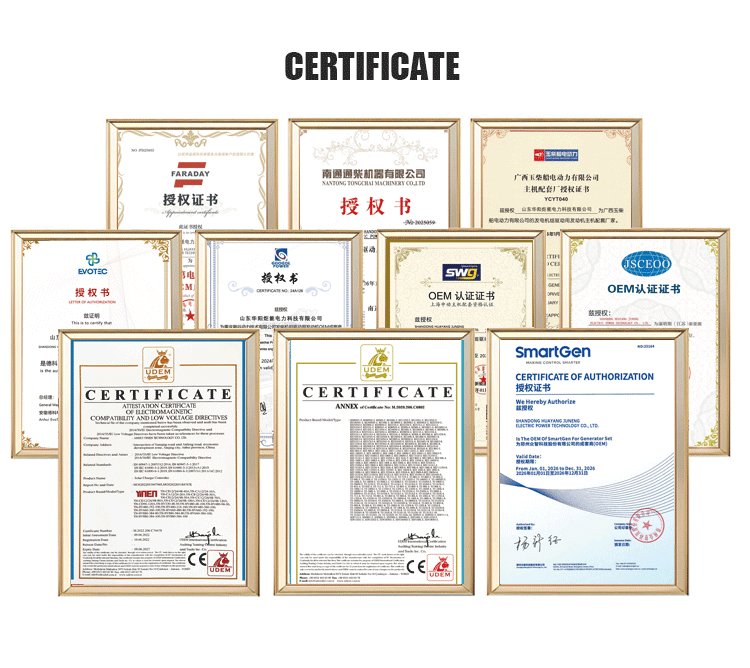
A:Common: CE, IEC 61215, IEC 61730, UL 1703, etc. Grid-tie inverters must comply with local grid codes such as VDE and AS/NZS.
Q:What is the maintenance schedule?
A:Recommended: clean panels every 6 months, check brackets, cables, and connectors. Inspect inverter cooling and alarms every 6 months. Full inspection annually. Recommended: check battery voltage, temperature, and BMS alarms every 6 months. Perform capacity calibration and connection check annually.
Q:How do I choose the battery capacity?
A:Based on daily consumption, backup days, and depth of discharge. Formula: battery capacity (kWh) = daily consumption × backup days ÷ DoD ÷ inverter efficiency.
Q:What is the difference between LiFePO4 and NMC?
A:LiFePO4 is safer, has a longer cycle life (≥6000 cycles), and slightly lower energy density. NMC has higher energy density but lower safety and lifespan. LiFePO4 is recommended for storage.
Q:What is the cycle life of the battery?
A:LiFePO4 battery: ≥6000 cycles at 80% DoD, design life over 10 years.
Q:What are the functions of the BMS?
A:BMS handles cell balancing, overcharge/over-discharge protection, overcurrent/short circuit protection, temperature monitoring, SOC/SOH estimation, and CAN/RS485 communication.
Q:Can it work with solar, wind, and generators?
A:Yes. It can work with solar, wind, and diesel generators in a hybrid system, coordinated by a hybrid inverter and EMS for higher reliability.
Q:Why your price is higher than others?
A:Some competitors quote fake low prices to attract orders. When you receive the goods, you will find the unit fails to reach the rated power and does not match what you ordered. You will waste your money in the end. Please do not be misled by extremely low prices.
 EN
EN